
Construction Site Security for Multifamily Projects: What’s Different and What’s at Stake
A generic construction site security plan — some fencing, a few cameras, maybe a guard on weekends — might be adequate for a remote infrastructure project or a single-family build. It is rarely adequate for a multifamily development.
Multifamily construction projects have a distinct combination of risk factors that most standard security setups are not designed to handle: long timelines spanning multiple high-theft phases, extremely high concentrations of copper and HVAC materials that are among the most targeted commodities in the country right now, proximity to occupied buildings that creates both liability exposure and unauthorized access pressure, and project values that can run into the tens of millions of dollars.
If you are developing or building multifamily housing — apartments, condominiums, mixed-use residential, affordable housing — here is what makes your security needs different and what a plan designed for your project type actually looks like.
The Multifamily Timeline Problem
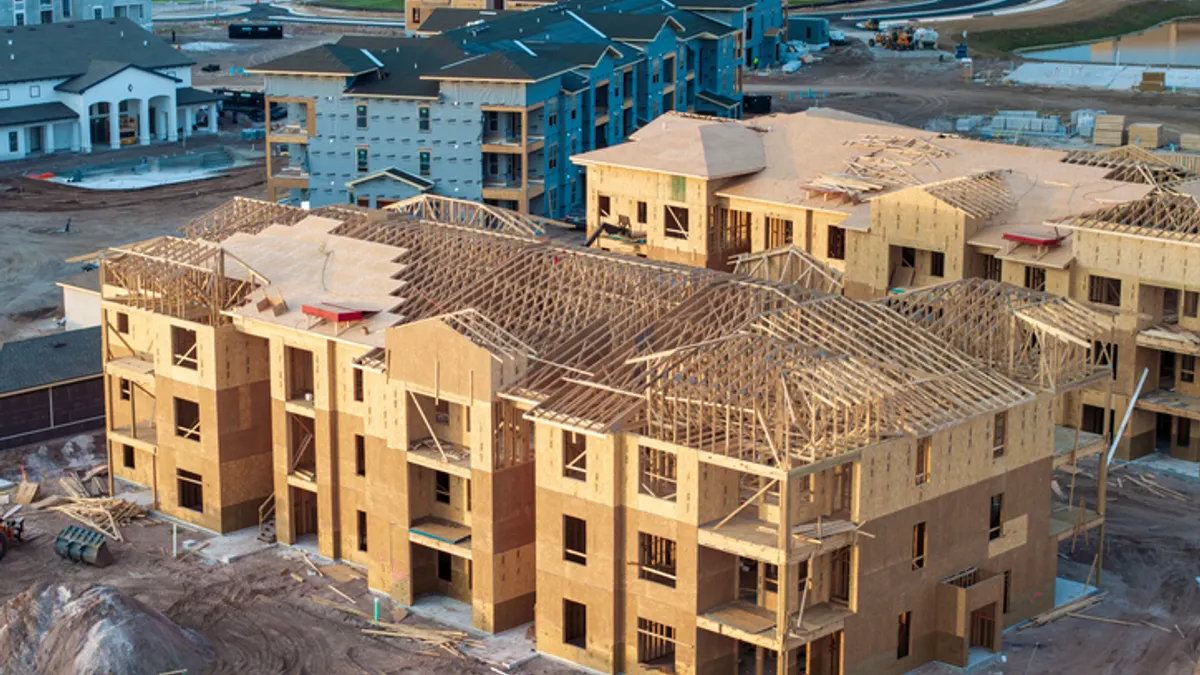
One of the most significant risk factors in multifamily construction is timeline length. A typical multifamily development from groundbreaking to certificate of occupancy runs 18 to 36 months, and larger projects can run longer. That is an extended window of exposure across multiple distinct phases, each with its own profile of valuable assets on-site and its own set of vulnerabilities.
In the early phases — site prep, foundation, framing — the primary targets are heavy equipment, tools, and lumber. As the project progresses into mechanical, electrical, and plumbing rough-in, the asset profile shifts dramatically toward copper wiring, plumbing, and HVAC components. In the final phases — finish work, appliance installation, fixture installation — theft risk often peaks because high-value finished goods are present and the site is increasingly accessible as trades cycle on and off.
Each phase requires a different security posture. A plan that made sense in month three will have significant gaps by month eighteen if it has not been updated. This is one of the most common security failures on multifamily projects: a plan gets put in place at the start and never revisited as the site evolves.
Copper and HVAC: The Multifamily Theft Epidemic
No conversation about multifamily construction security is complete without addressing copper. A multifamily building under construction is, at certain phases, essentially a warehouse of copper wire, copper plumbing, and copper-containing HVAC components — all sitting in an open structure overnight and on weekends.
The incentive for thieves has never been higher. Copper prices reached record levels in 2024 and continued rising into 2025, driven by surging demand from electric vehicles, renewable energy infrastructure, data centers, and AI facilities. The U.S. Department of Energy estimates that copper theft results in $1 billion in annual losses nationwide across all industries, with construction sites as the primary target. In 2025, the rollout of 50% tariffs on semi-finished copper products sent prices spiking further, making copper-rich construction sites even more attractive targets according to industry analysts.
The problem with copper theft on a multifamily project goes well beyond the replacement cost of the wire or pipe. When thieves strip copper from a partially completed building, they often cut through finished walls, damage conduit runs, compromise plumbing systems, and create electrical hazards that require inspection and recertification before work can resume. An HVAC coil that costs a few thousand dollars to replace can easily generate $20,000 or more in associated repair costs, lost labor time, and project delay once the full collateral damage is assessed. Multifamily projects with multiple floors and units multiply this damage quickly.
HVAC units in particular are targeted for the copper coils and refrigerant lines inside them. In 2024, police in Las Cruces, New Mexico reported that $1 million in HVAC equipment had been stolen from buildings in a single sweep — almost certainly for the copper content. This is not an isolated incident. It is a pattern playing out on multifamily and commercial construction sites across the country as copper prices remain elevated.
The Infill and Urban Site Problem
A significant share of multifamily development today is infill construction — projects built on lots within existing neighborhoods, often adjacent to occupied residential buildings, retail tenants, or operating businesses. This creates security challenges that a greenfield site simply does not have.
Unauthorized access from adjacent properties
When your construction site shares a fence line — or less — with an occupied apartment building, a commercial parking lot, or a public sidewalk, controlling who gets onto your site after hours is significantly harder than on a remote site with a single entry point. Foot traffic is constant during the day and creates cover for reconnaissance. After hours, access routes that would be obviously out of place on a remote site are unremarkable in an urban context.
Liability exposure from occupied neighbors
If an unauthorized person enters your construction site and is injured — whether they are a trespasser, a curious neighbor, or a child who found a gap in the fencing — your liability exposure is real. Courts have consistently found that construction sites have a duty to take reasonable precautions against foreseeable unauthorized entry, particularly in densely populated areas where children and others are predictably nearby. Documented security measures — active monitoring, adequate lighting, access logs — are your primary defense in any resulting legal action.
Vandalism and community friction
Multifamily infill projects are sometimes contentious in their neighborhoods. That community friction can translate into vandalism, trespassing, and deliberate property damage. Active monitoring that can document incidents and support law enforcement response is especially valuable in these situations — both to deter activity and to create an evidentiary record if it occurs anyway.
High Subcontractor Volume Means Higher Internal Risk
A multifamily project at full pace might have a dozen or more subcontractor crews cycling on and off the site in a single week — framers, electricians, plumbers, HVAC technicians, drywall crews, painters, flooring installers, and more. Managing that volume of access is a real security challenge.
Industry data consistently shows that internal theft — theft by workers on-site, by subcontractor employees, or by people posing as subcontractor workers — accounts for a meaningful share of job site losses. High subcontractor volume makes this harder to control. Without a credentialing system, a sign-in process, and active monitoring, it is genuinely difficult to know who is on-site at any given time, who has been there after hours, and who might have taken something.
Video footage with timestamps is the primary tool for investigating suspected internal theft. It is also a deterrent: workers who know the site is actively monitored are significantly less likely to test what they can get away with. This is one of the reasons remote video monitoring pays dividends that go beyond pure theft prevention — it changes the behavior of everyone on-site, not just external threats.
Phase-by-Phase Security Priorities for Multifamily Projects
A well-designed multifamily security plan accounts for how risk evolves across the project. Here is a general framework:
Site prep and foundation (months 1–4, approximate)
Primary threats are heavy equipment theft and unauthorized access. Priority is perimeter control, entry point management, and camera coverage of equipment staging areas. Mobile Security Units are ideal at this phase — the site layout is changing rapidly and fixed infrastructure is not yet in place.
Framing and structural (months 4–10, approximate)
Lumber theft peaks during framing phases. Access control becomes more complex as the building structure creates multiple entry points at each floor. Camera coverage needs to account for the evolving structure. Lighting in and around the building shell is critical.
MEP rough-in (months 8–18, approximate)
This is typically the highest-risk phase for a multifamily project. Copper wire, copper plumbing, and HVAC rough-in are all present simultaneously. Monitoring coverage should be at maximum density during this phase, with particular attention to after-hours and weekend periods. Thermal cameras are valuable here because copper theft often happens in the darkest hours of the night.
Finish work and close-out (months 16–36, approximate)
High-value finished goods — appliances, fixtures, doors, cabinets — are on-site and increasingly accessible as the building nears completion. Subcontractor volume is often at its highest. Access control and monitoring should remain rigorous through certificate of occupancy. Many projects relax security prematurely in this phase and pay for it.
What an Effective Multifamily Security Plan Includes:
Given the risks above, a security plan designed specifically for multifamily construction should include:
- Remote video monitoring with 24/7 coverage and real-time alerting — not passive recording that gets reviewed after a theft
- Mobile Security Units that can be repositioned as the project progresses through phases and the site layout changes
- Thermal cameras for perimeter and after-hours coverage, particularly during MEP rough-in when copper is most at risk
- Floodlighting integrated with camera coverage at all entry points and high-value material storage areas
- 5G connectivity where site infrastructure is not yet in place — reliable connectivity is non-negotiable for real-time monitoring on urban infill sites
- A formal access credentialing process that tracks who is on-site and when, supporting both security and any subsequent incident investigations
- A documented plan that is updated as phases change — not a set-it-and-forget-it installation
Multifamily Security Is a Project Investment, Not a Line-Item Cost
A multifamily development represents a significant capital investment, often over many years. The security budget protecting that investment is a fraction of the total project cost — and a fraction of what a single serious theft incident, a significant delay, or a liability claim from an unauthorized site entry can cost.
The developers and GCs who finish multifamily projects on time and on budget treat security as a project management function, not an afterthought. They plan it before ground breaks, update it as phases evolve, and use technology that is actually designed for the dynamic conditions of a long-running construction project.
If you are in the planning or active construction phase of a multifamily project and want to talk through what a purpose-built security plan looks like for your site, contact Site Security Systems.
We specialize in construction security, and multifamily is one of the environments we know best.