

A Night in the Life of a Remote Monitoring Operator
Somewhere right now, a construction site is sitting empty. The gates are closed. The equipment is parked where the crew left it. The last truck pulled out hours ago, and the next one will not arrive until morning.
And someone is watching it.
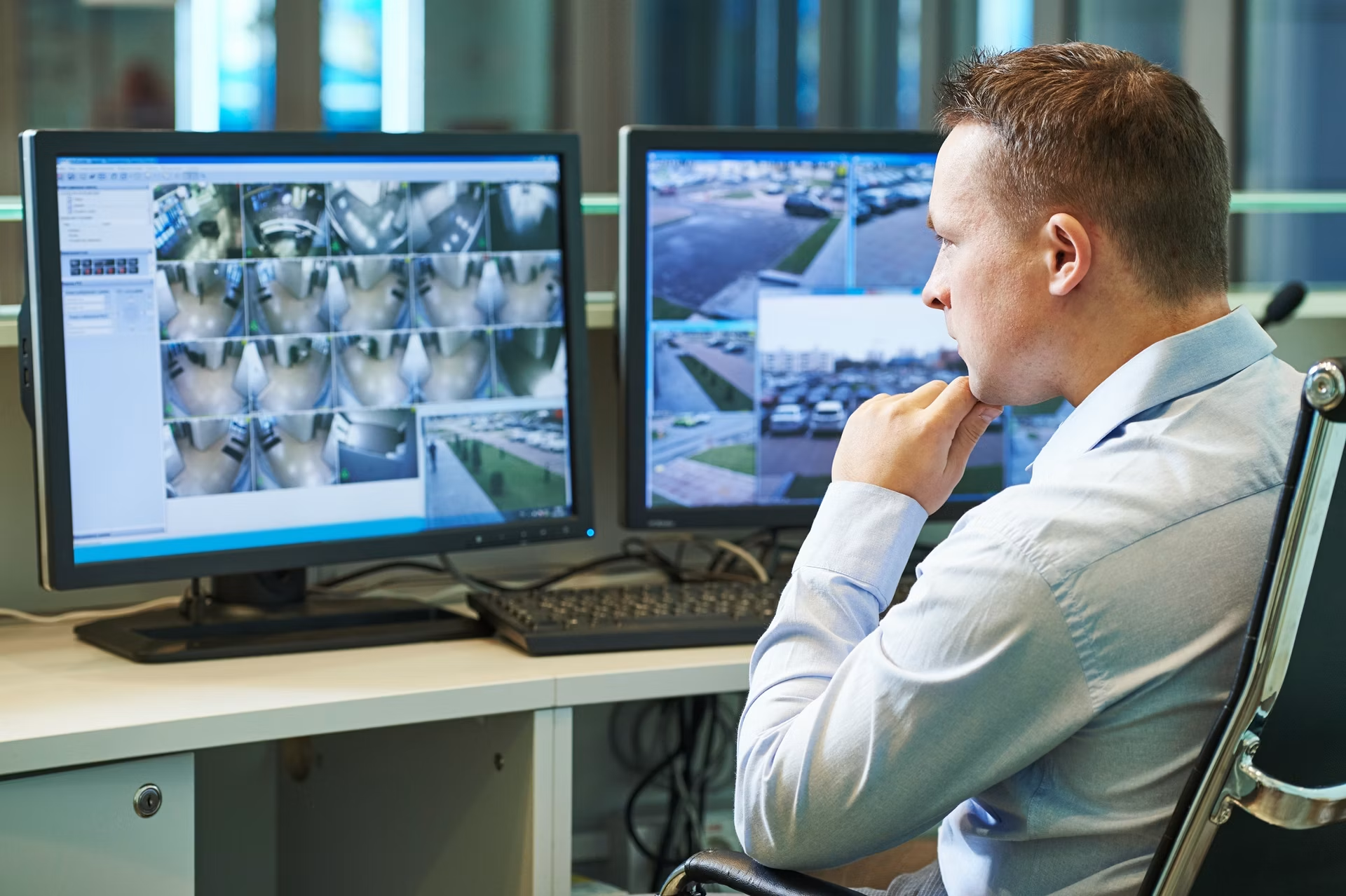
Not a guard walking a perimeter. Not a camera quietly recording to a hard drive that nobody will look at until something goes missing. A person — sitting in front of a wall of monitors, hundreds of miles away, watching that site and dozens of others in real time, right now, while you are reading this.
Most people who hire a monitoring service have never thought about what actually happens on the other end of it. Here is what a shift looks like from inside.
9:00 p.m. — Shift Change
The handoff takes about fifteen minutes. The outgoing operator walks the incoming one through anything notable from the day shift — a delivery truck that is expected to drop materials after hours at one site, a new subcontractor crew that started this week at another and has not been added to the authorized vehicle list yet, a camera at a third site that has been throwing intermittent connectivity alerts and is scheduled for a technician visit Thursday.
Then the incoming operator settles in. The workstation shows a grid of live feeds — could be a dozen sites, could be more, depending on the operator’s assignment for the night. Each site has multiple camera angles: entry points, equipment staging areas, material laydown zones, perimeter fence lines. Some feeds are in color, lit by floodlights. Others are in thermal — white-hot outlines of a parked excavator, a stack of lumber, a stray cat moving along a fence line that the system has already learned to ignore.
The operator does a pass across every feed. Nothing unusual. Equipment parked where it should be. Gates closed. The job sites look exactly like job sites look at 9 p.m. — still, quiet, waiting for morning.
10:40 p.m. — The First Alert
A motion alert fires on Site 7 — a multifamily project, currently in framing phase. The AI system has flagged movement along the east perimeter.
The operator pulls up the feed. It takes about two seconds to see what triggered it: a tarp covering a stack of lumber has come loose at one corner and is flapping in the wind. The system flagged it because it is movement at the perimeter — exactly what it is supposed to flag. The operator clears the alert, notes it in the log, and moves on.
This happens dozens of times a night, across every site. Wind. Rain. A raccoon. Shadows shifting as clouds move past a security light. Each one gets the same treatment: a quick visual check, a determination in seconds, and a return to the grid. The AI analytics filter out the vast majority of this before it ever becomes an alert at all — but nothing filters out everything, and the operator is the final check on every flag that does come through.
It is not exciting. It is also exactly what is supposed to happen. The boring alerts are the system working.
12:15 a.m. — A Familiar Face, At an Unfamiliar Time
Site 3 — a commercial build downtown — shows a person walking toward the main gate. The operator pulls up the feed and recognizes him immediately: it is the site superintendent’s truck, and the person getting out of it is someone who has been on this camera every day for the past six weeks.
But it is 12:15 a.m. on a Tuesday. That is not a normal time for him to be here.
The operator does not assume it is fine just because the face is familiar. The protocol is the same regardless of who it is: the operator activates the two-way audio system at the gate and asks who is there and why. The superintendent, slightly startled by a voice coming from a speaker at midnight, explains that he forgot his laptop in the site trailer and is just grabbing it before he heads home — he was at a late dinner nearby and remembered on the way.
The operator verifies his name against the authorized personnel list for the site, confirms it matches, and lets him know the system will note his visit in the activity log. He is in and out in under five minutes. The operator logs the interaction with a timestamp and a brief note, in case anyone asks about it later.
Nothing happened. But if it had been someone else — if the person getting out of an unfamiliar vehicle at that gate at that hour had not had a reasonable answer, or any answer at all — the next steps would have been very different, and they would have started within the same thirty seconds.
2:50 a.m. — The Moment Everything Changes
Site 11 is a large infrastructure project on the edge of town — long perimeter, multiple equipment staging areas, minimal ambient lighting beyond what the security system provides. At 2:50 a.m., a thermal camera on the north side flags two heat signatures moving along the fence line, away from any road or authorized access point.
The operator pulls up the feed immediately. Two people, on foot, moving with purpose along the fence — not wandering, not lost. They stop near a section of fencing close to where a generator and several pieces of small equipment are staged.
This is the moment the entire system exists for. The operator does three things, almost simultaneously, in the span of under a minute. First, audio: a clear, recorded warning broadcasts from the speaker nearest their position — that the site is under live monitoring, that their presence has been recorded, and that authorities have been notified. Second, the spotlight system on that section of fence activates, flooding the area with light. Third, the operator begins the call to local law enforcement, providing the address, the description of the individuals, and what the cameras are showing in real time.
The two figures on screen do not wait around to find out if the warning is real. Within seconds of the audio and lights activating, they are moving back toward the fence line, away from the equipment, and within two minutes they are gone — out of frame, off the property.
The operator stays on the line with dispatch, continues monitoring the site in case they return, and documents everything: the time the motion was first detected, the time of the audio warning, the time the individuals left, still frame captures from the thermal feed. By 3:10 a.m., the site is quiet again. Nothing was taken. The generator that was sitting forty feet from where two people stopped walking is exactly where it was at 9 p.m.
The operator updates the log, flags the incident for the morning report so the project’s superintendent will see it first thing, and goes back to the grid. Eleven other sites are still up on the wall. It is 3:12 a.m.
4:30 a.m. — The Quiet Stretch
The hours between 3 and 5 a.m. tend to be the quietest. The operator uses this stretch to do a more deliberate review — checking each site methodically rather than just responding to alerts, looking for anything that might not trigger the AI system but that a trained eye would catch. A gate that looks slightly more open than it should. A piece of equipment that seems to have been moved a few feet from where it was at the start of the shift. A vehicle parked on the street outside a site that was not there during the evening pass.
Most of these checks turn up nothing. That is the point. The operator is not looking for problems because problems are expected — the operator is looking because not looking is how things get missed.
Coffee. A stretch. The grid keeps running.
6:00 a.m. — Handoff
As the morning shift starts, the overnight operator runs through the log for the handoff. Eleven sites, one incident report for Site 11, a midnight visitor logged at Site 3, and a note that the loose tarp at Site 7 should probably get re-secured before it triggers the same alert again tonight.
The morning operator takes over. The first trucks of the day are starting to arrive at some of the sites — and on every camera feed, equipment is sitting exactly where it was left the night before. Nothing missing. Nothing disturbed.
For the superintendents and project managers who will walk onto those sites in the next hour, this morning will be unremarkable. They will not think about the loose tarp, the midnight laptop run, or the two people who turned around and left at 2:50 a.m. They will just start their day, because their equipment is there, because nothing happened.
That is what the system is for. Not the dramatic save — though those happen, and Site 11 was one of them tonight. The real value is in every site, every morning, where the most notable thing that happened overnight was a tarp flapping in the wind. An unremarkable morning is the product.
What This Means for Your Site
When people compare security options, the conversation often centers on hardware — camera resolution, number of units, coverage area. Those things matter. But the difference between a camera system and a monitored security system is everything described above: a person, watching, capable of telling the difference between a tarp and a threat, with the ability to respond — audio warnings, lighting, law enforcement coordination — while something is happening, not after.
Your site does not need to make headlines for the system to be working. Most nights, for most sites, the system’s job is to make sure tomorrow morning looks exactly like every other morning. And on the nights when it is not — when two people are standing at your fence line at 2:50 a.m. — there is someone there who notices, and who does something about it before you ever have to.
If you want to understand what monitored coverage looks like for your site — what gets watched, how alerts are handled, and what a real response actually involves — contact Site Security Systems. We can walk you through exactly how it works, because how it works is the whole point.