
Integrating Energy-efficient Solar Panel Modules for Reliable Off-Grid Security
Power has always been one of the biggest obstacles in deploying security systems, especially on construction sites, remote infrastructure projects, and temporary locations. Running trench lines for power is expensive. Coordinating with utilities delays timelines. Generators require fuel, maintenance, and constant oversight. In many cases, the power challenge becomes the reason security coverage is reduced or postponed.
That is changing.
High-efficiency solar panel modules are making it possible to deploy surveillance and monitoring systems exactly where they are needed, without waiting on grid access or absorbing unnecessary infrastructure costs.
Why Solar Integration Is Gaining Momentum
Modern security systems are more advanced than ever. High-resolution cameras, wireless transmitters, motion sensors, and access control systems all require consistent, dependable power. When a site is remote or still under development, that power is often unavailable or unreliable.
Solar modules solve that problem at the source. By generating electricity on-site, they eliminate the dependency on utility hookups and allow security systems to operate independently from the grid. For perimeter protection, temporary job sites, staging yards, and rural facilities, this independence is a major operational advantage.
Performance That Supports Real Security Demands
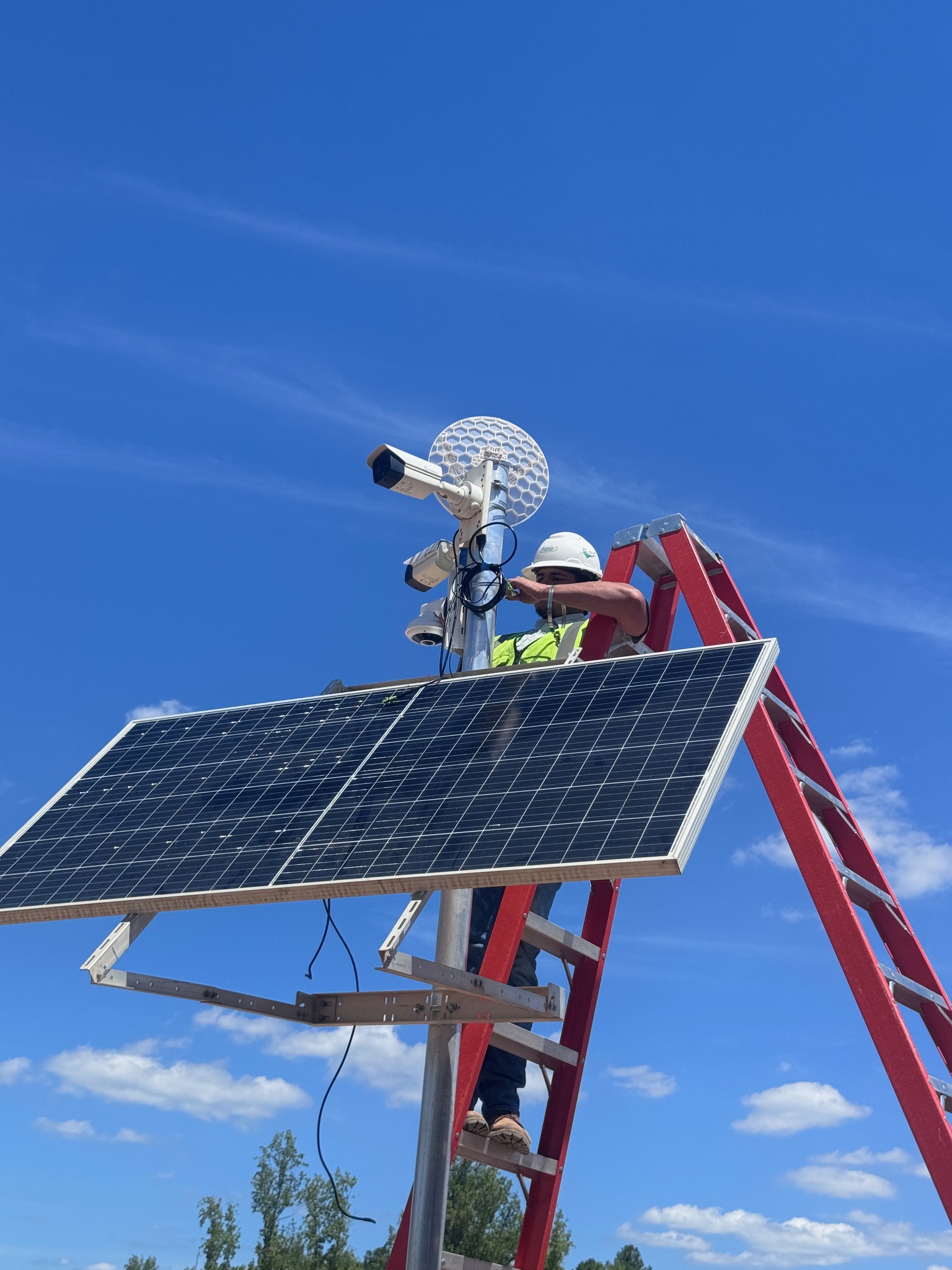
Today’s solar modules are engineered for serious output and durability. High-efficiency monocrystalline cells maximize energy conversion, producing more power from a smaller footprint. This is critical when integrating solar onto mobile security towers or compact mounting systems.
Bifacial panel design adds another layer of efficiency. These modules capture sunlight from both the front and rear surfaces, increasing total energy yield. On construction sites where surfaces like gravel, concrete, or sand reflect light, this design can significantly improve overall performance without increasing panel size.
With power ratings in the 500 to 600 watt class, these modules generate enough electricity to support cameras, sensors, communication equipment, and onboard processing systems. When paired with properly sized battery storage, they provide stable and continuous operation through the night and during periods of low sunlight.
Just as important, they are built for outdoor environments. Wind, hail, ultraviolet exposure, and temperature fluctuations are expected conditions on active job sites. Durable construction ensures long-term performance with minimal maintenance.
Removing the Biggest Barrier to Deployment
For many security managers, power access is the primary hurdle. Remote perimeters, temporary expansions, or fast-moving construction phases make traditional wiring impractical or cost-prohibitive. Trenching disrupts site operations and adds labor expense. Utility coordination slows progress. Generators introduce fuel costs and noise.
Solar-powered modules eliminate those complications. Security equipment can be deployed quickly without excavation or permanent infrastructure. Systems can be relocated as a project evolves. Coverage can expand or contract as risk levels change.
This flexibility is particularly valuable in construction environments where security needs shift from phase to phase. Early groundwork may require perimeter monitoring. Later stages may focus on material storage areas or high-value equipment. Solar-powered systems adapt without requiring new electrical installations each time.
Ensuring Continuous Operation
Energy independence does not mean sacrificing reliability. When solar modules are combined with battery storage and intelligent load management, they provide continuous operation even during blackouts or grid instability. This is especially important as weather events and power disruptions become more common.
Instead of relying on external infrastructure, the system controls its own energy production and storage. That level of autonomy reduces downtime risk and strengthens overall site resilience.
Financial and Environmental Advantages
Beyond operational convenience, integrating solar panel modules delivers measurable cost benefits. There are no utility connection fees, no trenching labor, and no recurring fuel costs associated with generators. Over time, those savings are substantial.
There is also a sustainability benefit that many organizations can no longer ignore. Reducing dependence on fossil fuels and lowering carbon impact supports broader environmental goals and strengthens corporate responsibility initiatives. Solar-powered security aligns practical site protection with long-term sustainability planning.
A Smarter Approach to Modern Site Security
Security systems are only as reliable as the power behind them. By integrating high-efficiency solar panel modules, organizations remove one of the most persistent obstacles in site protection. They gain flexibility, reliability, and cost control in a single solution.
For remote locations, expanding perimeters, and temporary installations, solar integration is no longer an alternative option. It is becoming the standard for smart, resilient, and forward-thinking security deployment.