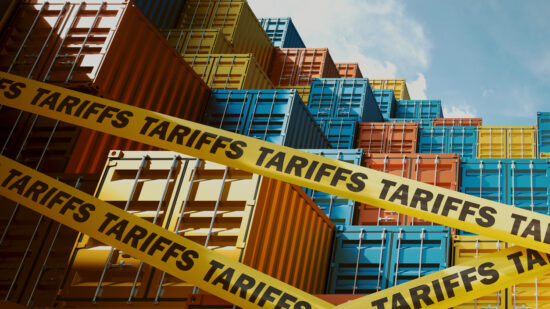
Tariffs Are Making Construction Site Security More Important Than Ever
Construction has always been a high-theft industry. Open sites, valuable assets, long overnight windows, and inconsistent security coverage have made job sites a persistent target for decades. But the risk calculation changed significantly in 2025 and 2026 — not because theft patterns shifted, but because the value of what is sitting on those sites went up dramatically.
Federal tariffs on steel, aluminum, copper, and lumber have driven construction material costs to levels the industry has not seen since the supply chain crisis of 2021 and 2022. Steel and aluminum now carry a 50% tariff. Copper reached the same rate on August 1, 2025. Softwood lumber carries a 10% base tariff on top of existing anti-dumping duties that pushed the total cost of Canadian lumber — which accounts for roughly 85% of U.S. softwood lumber imports — up by approximately 45%, according to the National Association of Home Builders.
The construction theft problem has not gotten worse, but the cost of each incident has. When the materials on your site cost 20%, 30%, or 50% more than they did two years ago, the financial impact of a single theft event scales accordingly. For project budgets already under pressure from tariff-driven cost escalation, a theft incident that would have been painful before can now be genuinely project-threatening.
The Numbers Behind the Cost Escalation
The scale of tariff-driven cost increases is not theoretical — it is showing up directly in project budgets. According to the Associated General Contractors of America, input prices for nonresidential construction surged at a 12.6% annualized rate during the first two months of 2026, the fastest pace since the supply chain disruptions of early 2022. Cushman & Wakefield estimated that current tariff rates, as of April 2026, will result in a 6% increase in construction materials costs relative to a 2024 baseline, with total project costs rising approximately 3%.
For the materials most commonly targeted by thieves, the increases are even more pronounced. The producer price index for aluminum mill shapes jumped 22.8% year-over-year as of August 2025. Steel mill products climbed 13.1% over the same period. Copper wire and cable — among the most frequently stolen materials from construction sites nationwide — saw sharp tariff-driven spikes after the 50% copper tariff took effect in August 2025.
The NAHB estimated that tariff actions are adding an average of $10,900 per new home in construction costs, with more than 60% of builders surveyed already reporting higher costs due to tariffs. For multifamily and commercial projects with far greater material volumes, the per-project impact is proportionally larger.
What this means practically is straightforward: the materials being staged on your site right now are worth more than equivalent materials would have been worth eighteen months ago. The theft risk has not changed — the stakes have.
How Tariffs Change the Theft Calculation
Construction site theft has always followed the value of materials. Copper theft surged during the commodity price spikes of the mid-2000s and again during the infrastructure build-out that followed COVID stimulus spending. Lumber theft spiked dramatically when framing lumber prices quadrupled during the pandemic supply crisis. The pattern is consistent: when materials become more valuable, the incentive to steal them increases and the secondary market for those materials becomes more active.
The tariff environment of 2025 and 2026 is creating exactly that dynamic for multiple material categories simultaneously. Steel, aluminum, copper, and lumber are all elevated at the same time. HVAC equipment incorporating copper components, electrical conduit, and structural steel are all more valuable on the secondary market than they were before tariffs took effect. For organized theft operations — which account for a significant share of high-value construction site theft — the current environment is unusually attractive.
The compounding factor is that replacement costs have risen in parallel. When lumber was $400 per thousand board feet, replacing a stolen bundle hurt. When it is $872 per thousand board feet, as framing lumber was pricing in early 2026 according to industry reports, the same theft costs more than twice as much to recover from. The gap between what theft cost before and what it costs now is not small.
Tariff Pressure Is Squeezing Contingency Budgets
One of the less-discussed consequences of tariff-driven cost escalation is what it does to project contingency budgets. On a well-run construction project, contingency exists to absorb unexpected costs — weather delays, design changes, material substitutions, and, yes, theft and vandalism. When tariffs push baseline material costs up by 6–12%, contingency that was sized for a different cost environment shrinks as a percentage of actual project exposure.
A theft incident that a well-funded contingency could have absorbed without significant disruption becomes a budget crisis when contingency is already being consumed by tariff-driven overruns. GCs and developers who are managing projects under tariff pressure have less financial cushion to absorb security incidents than they did before — which means the downside risk of inadequate security has increased even if the probability of theft has stayed the same.
This is the security budget argument that tariffs make automatically: when project budgets are tighter, the cost of an inadequately protected incident goes up, and the relative cost of prevention goes down. A monitored security system that costs $X per month looks different when an unrecovered theft of elevated-cost materials could cost $10X or more to replace and remediate.
The Materials at Greatest Risk Right Now
Not all tariff-affected materials carry equal theft risk. The materials that are both significantly impacted by tariffs and historically most targeted by thieves represent the highest-priority protection areas on any active job site in 2026.
Copper wire, plumbing, and HVAC components
Copper is simultaneously one of the most tariff-affected materials (50% tariff as of August 2025) and one of the most consistently stolen materials from construction sites. The combination of elevated tariff costs and continued high demand from electric vehicles, data centers, and renewable energy infrastructure has kept copper prices elevated and secondary market demand strong. A site in MEP rough-in phase right now has more copper value staged in it than at any point in recent memory.
Structural steel and aluminum
Steel and aluminum carry a 50% tariff on items made primarily of those metals. While bulk structural steel is harder to move quickly than copper, fabricated components — rebar bundles, aluminum framing, metal studs, steel decking — are frequently targeted because they can be loaded efficiently and move easily on the secondary market. Projects with significant steel scope are carrying materially higher value in staged materials than pre-tariff equivalents.
Lumber and framing materials
Softwood lumber carries combined tariffs that have pushed Canadian lumber costs up roughly 45%. Framing lumber was pricing around $872 per thousand board feet in early 2026. A loaded flatbed of framing lumber represents a substantially higher dollar value than it did two years ago, and the secondary market for construction lumber — particularly in active building markets — has remained liquid.
Electrical equipment and controls
Industrial and electrical grid equipment incorporating steel, aluminum, and copper now carries a 15% tariff, according to the AGC’s Tariff Resource Center. Transformers, panel boards, conduit systems, and electrical controls are both higher in value and experiencing supply delays due to tariff-driven procurement disruptions — which means replacement lead times are longer and the cost of theft-related delays is amplified further.
What a Tariff-Aware Security Plan Looks Like
A security plan designed for the current cost environment looks different from one designed for pre-tariff conditions in one specific way: the coverage priorities need to reflect where the most value is concentrated, and that has shifted.
In practice, this means:
- MEP rough-in phases should now be treated as the highest-security phase of any project — not just because copper has always been a theft target, but because it is a more valuable target than it has been in years
- Material laydown and staging areas deserve camera coverage and lighting as a standard, not an option — these are where tariff-affected materials are most concentrated and most accessible
- Electrical equipment storage, particularly for panel boards, conduit systems, and controls, should be treated as a high-priority coverage zone given both the value increase and the replacement lead time problem
- Overnight and weekend coverage should be maximized during any phase when high-tariff materials are on-site in significant quantities — this is when theft occurs and when the cost of an undetected incident is highest
- Remote video monitoring with real-time alerting is the appropriate baseline for any project carrying tariff-elevated material value — passive recording that gets reviewed after a theft has occurred does not reduce loss, it only documents it
The underlying security technology has not changed. What has changed is the financial argument for deploying it seriously. When every pound of copper and every beam of lumber on your site costs more, protecting it is worth more too.
The Cost of Prevention Has Not Kept Pace with the Cost of Theft
Tariffs have driven construction material costs to some of their highest levels in years. They have not driven security technology costs up proportionally. That gap — between the rising value of what is on your site and the relatively stable cost of monitoring it — is the clearest financial argument for upgrading your security posture that the current environment provides.
The contractors and developers who navigate 2026 without theft-related budget disruptions will not be the ones who got lucky. They will be the ones who looked at the cost environment, recognized what it meant for their exposure, and made sure their site security reflected the actual value at risk.
If you want to assess whether your current setup is adequate for the tariff-elevated cost environment your project is operating in, contact Site Security Systems. We will walk your site, review your phase schedule, and build a monitoring plan that reflects what your materials are actually worth right now.